Reclaim rate vs. stacking rate: what a coal pile's shape tells a fuel buyer
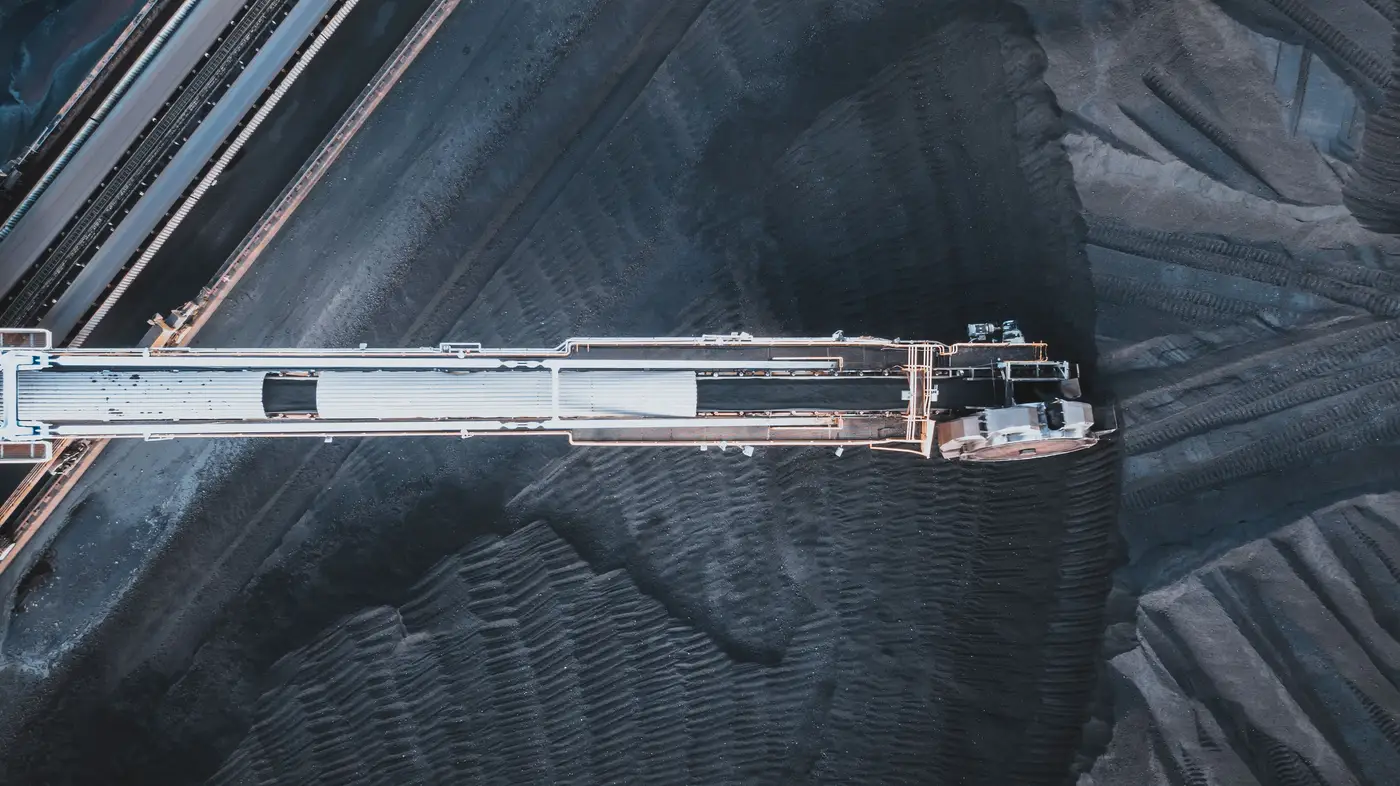
A fuel desk doesn't need a tonnage figure to know which way a plant's inventory is moving. The pile tells you first, and it tells you in shape, not weight.
Utility filings and EIA-923 data arrive weeks or months after the fact. By the time a stockpile number shows up in a public dataset, the plant has already burned through whatever it was sitting on and restocked twice over. Anyone pricing basis or forecasting burn against a specific unit needs a signal that moves on the same clock as the plant does, and the pile itself is that clock.
Stacking rate and reclaim rate aren't the same motion
Stacking is the conveyor-and-stacker side of the yard: coal coming in from rail or barge, laid down in a line or a cone, building height and length as deliveries land. Reclaim is the other direction. A bucket-wheel reclaimer or a front-end loader crew works the toe of the pile, pulling material back onto a conveyor headed for the crusher house and the boiler.
A plant can be doing both at once. Deliveries keep landing on one end of the yard while reclaim works the opposite end or an older windrow. What a fuel buyer needs to know is the net of the two: is the yard growing, shrinking, or holding steady week to week. That net is what shows up in the geometry.
How the shape encodes the net
A pile that's growing reads as a clean, unbroken ridge or cone with a consistent angle of repose along its full length. New coal sits on top of old coal, and the surface looks continuous because nothing's being cut into it. Stacking is winning.
A pile under active reclaim looks different. You get benching, which is the stair-step terracing a bucket-wheel reclaimer leaves as it works down through layers, or a notch cut into one end of a windrow where a loader has been pulling material for several shifts. The top surface loses its smooth taper and starts showing flat-cut faces. If reclaim is outrunning stacking, the whole footprint of the pile contracts week over week, not just the peak height, since yard crews pull from the working face rather than skimming the top evenly.
Height alone is a weak tell on its own. A pile can lose height from settling or compaction without losing volume in any way that matters to a burn forecast. Footprint change paired with the bench or notch pattern is the more reliable read, because it reflects material actually leaving the yard rather than the pile just sitting lower under its own weight.
Plants running close to capacity and taking steady deliveries tend to keep the simplest shapes: long, low windrows with a rounded crest and minimal benching, because reclaim is pulling roughly what stacking is adding. A plant drawing down ahead of a planned outage or riding out a rail service problem on the inbound side shows the opposite. Visible terracing, a shrinking footprint, and sometimes exposed stockpile pad where coal used to sit.
Reading it without a crew on the ground
None of this requires someone standing at the scale house with a clipboard. A weekly image of the yard, read for footprint, bench pattern, and crest shape against the prior week, gives a fuel buyer the direction of travel on inventory well before a filing confirms it. That's the whole premise behind a weekly nowcast of thermal plant activity built from imagery, stacking coal-pile volumetrics against stack and cooling-water signatures for a named plant so the pile's story lines up with whether the units are running this week.
If a counterparty's story about tight supply doesn't match what the yard looks like this week versus last, the pile usually has the better answer.
Worth checking what your named plants look like from the air this week.